


How to avoid ghosting issues when making double-sided banner ads?
Release Time : 2025-12-26
During the production of double-sided banner ads, ghosting not only affects visual appeal but can also reduce the efficiency of advertising message delivery, especially in complex outdoor lighting conditions where ghosting further weakens image clarity. To avoid this problem, a comprehensive solution requires optimization across multiple dimensions, including equipment precision, material properties, process parameters, and operational procedures.
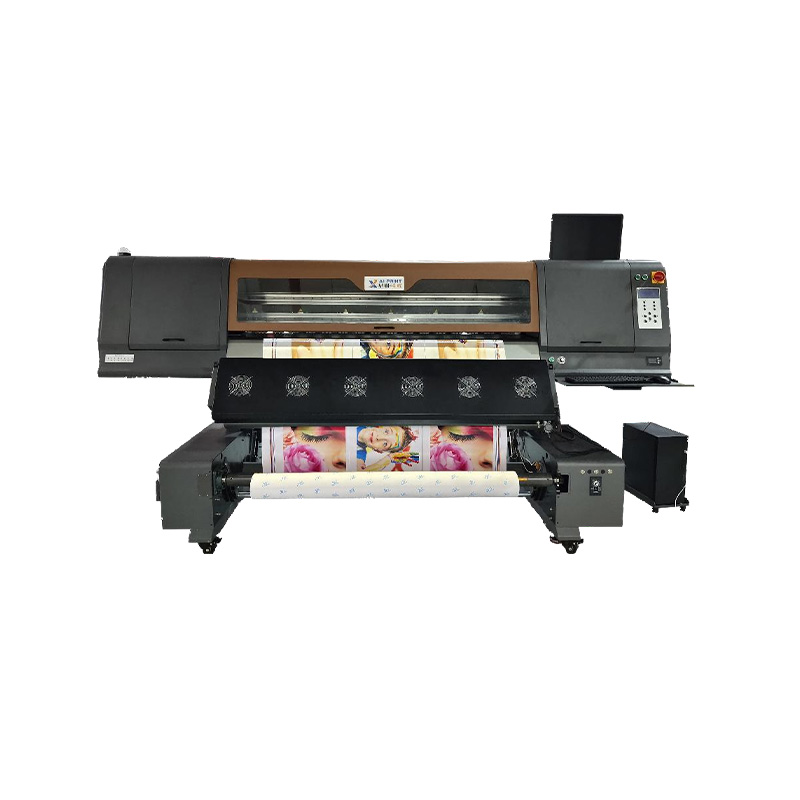
Equipment precision is fundamental to avoiding ghosting. The printhead positioning accuracy of a double-sided inkjet printer directly affects the image overlay effect. Even slight deviations in the X and Y axes, or a lack of strict synchronization between the two printheads, can lead to misalignment and ghosting. Therefore, the printer's mechanical structure must be calibrated regularly to ensure the straightness of the guide rails, the precision of the lead screw drive, and the consistency of printhead spacing. Simultaneously, using a high-precision servo motor drive system can reduce vibration and delay during movement, improving printing stability. For example, some high-end equipment uses laser positioning technology to correct printhead position in real time, controlling errors to the micrometer level and effectively preventing ghosting.
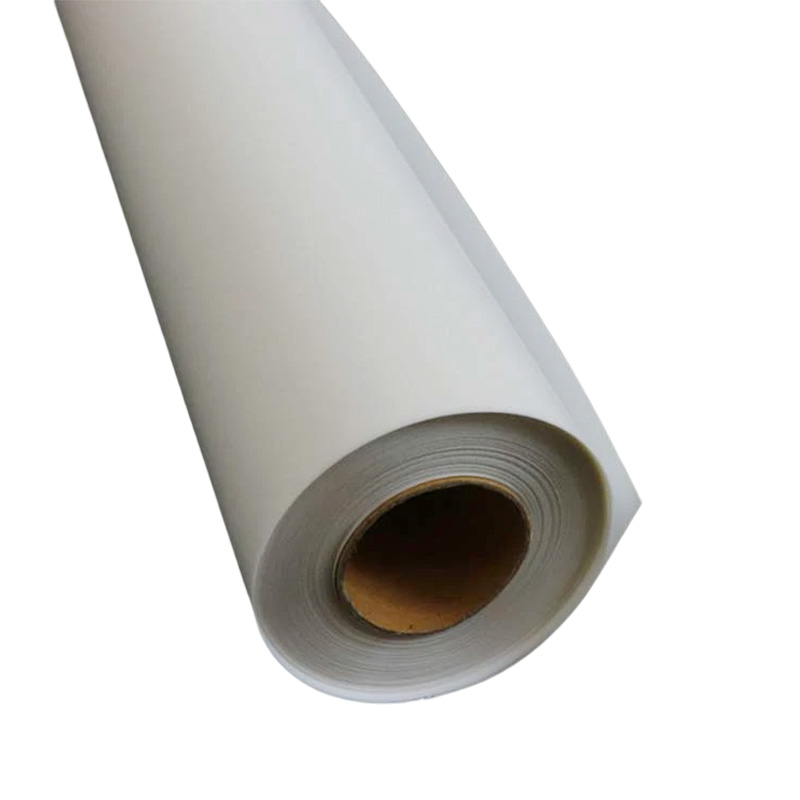
The material properties of banner ads also significantly impact ghosting. The substrate for double-sided inkjet printing must have uniform thickness and flatness. If the material has localized bumps or depressions, the ink distribution during printing will be uneven, leading to inaccurate alignment of the two sides. Furthermore, the substrate's ink absorbency must be moderate; excessive absorbency can cause ink penetration and diffusion, while insufficient absorbency results in inadequate ink adhesion, both potentially causing ghosting. Therefore, the inkjet fabric must be rigorously inspected before production, discarding banner ad materials with thickness deviations exceeding standards or surface defects. For example, coated polyester fiber inkjet fabric has superior surface flatness and ink absorbency, significantly reducing the risk of ghosting.
Precise control of process parameters is crucial to avoiding ghosting. Parameters such as printing speed, printhead voltage, and droplet size need to be dynamically adjusted according to the type of inkjet fabric and the complexity of the image. If the printing speed is too fast, ink droplets may be carried away by the printhead before fully adhering, easily leading to a blurred image; excessive printhead voltage may cause ink droplets to splatter, creating scattered ghosting. Additionally, during double-sided printing, it is essential to ensure that the printing sequence on both sides is consistent to avoid shrinkage and deformation due to differences in ink drying time. For example, adopting a fixed process of "spraying the front side first, then the back side," and controlling the ambient humidity within the range of 40%-60%, can reduce deformation during the ink drying process and improve image alignment accuracy.
Ink compatibility is crucial for controlling ghosting. Different brands of ink differ in chemical composition, viscosity, and drying speed. Using different inks on both sides may cause image misalignment due to different drying shrinkage rates. Therefore, it is necessary to use inks of the same brand and batch, ensuring their compatibility with the inkjet fabric. For example, water-based inks are suitable for hydrophilic inkjet fabrics, while solvent-based inks require hydrophobic banner ad materials. Compatibility testing can identify potential problems early and prevent ghosting.
Standardized operating procedures are essential to avoid ghosting. Before printing, the printer must be thoroughly cleaned to remove residual ink and dust from the printhead, preventing clogging or ink splatter. During printing, the printhead status should be checked regularly, and any clogged or misaligned nozzles should be cleaned promptly. After printing, a static alignment check should be performed on the image. Using a magnifying glass or professional software, the pixel-level deviation of the double-sided pattern should be compared to ensure there is no ghosting before cutting and installation. For example, some production teams use a "double-check" system, where two operators check the image quality separately, which can significantly reduce ghosting problems caused by human error.
Environmental factors affecting ghosting must be considered. Temperature, humidity, and airflow speed affect ink drying speed and printhead deformation. High temperatures cause ink to dry too quickly, leading to uneven image shrinkage; high humidity can cause ink to penetrate and spread, blurring edges. Therefore, double-sided printing should be done in a cleanroom with constant temperature and humidity, and the airflow speed should be controlled below 0.5 m/s to reduce environmental interference. For example, using a combined air conditioning and dehumidifier system can stabilize environmental parameters within the optimal range, improving printing quality.
To avoid ghosting in double-sided banner and ad printing, it is necessary to optimize multiple aspects, including equipment precision, material selection, process parameters, ink matching, operating procedures, and environmental control. By strictly controlling the quality standards of each step and establishing a dynamic feedback mechanism, the precision and stability of double-sided printing can be significantly improved, ultimately resulting in clear, ghost-free, high-quality advertising images.