




How do 1-16 head photo machines achieve efficient ink supply and avoid printing interruptions due to ink shortages?
Release Time : 2026-01-13
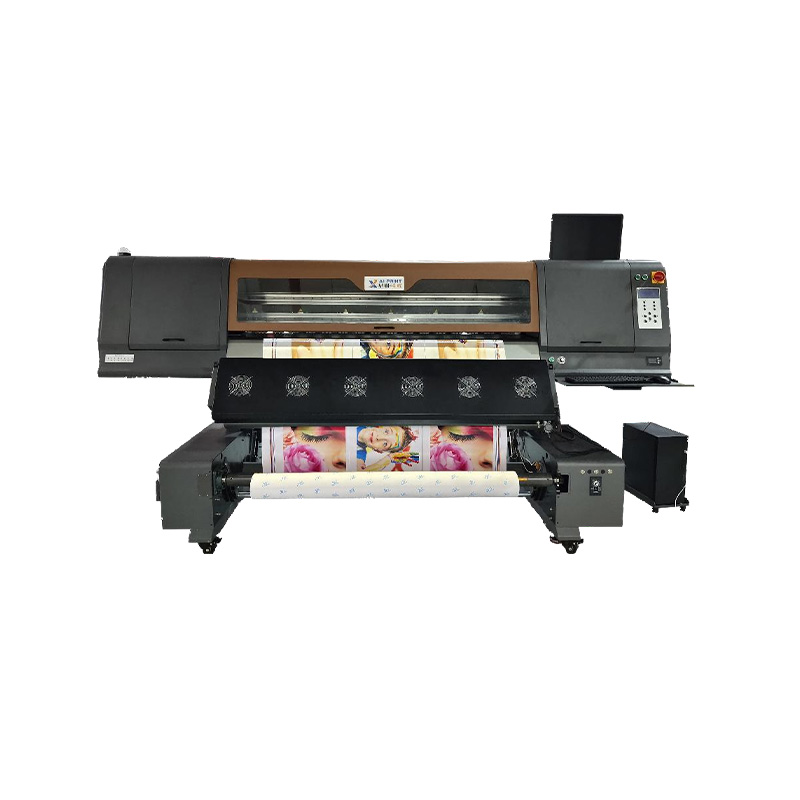
In the high-volume, high-precision advertising and industrial inkjet printing fields, 1-16 head photo machines, as core production equipment, directly determine order delivery efficiency and image quality through their continuous and stable operation. However, the simultaneous high-speed ink jetting from up to 16 printheads places extremely high demands on the ink supply system—ensuring both instantaneous high-flow-rate supply and maintaining constant pressure, air bubble removal, and color consistency. Insufficient ink supply can lead to issues ranging from broken lines and color differences to complete batch scrapping or equipment downtime.
1. High-capacity centralized ink supply system ensures continuous output
Unlike desktop printers with their small ink cartridges, 1-16 head photo machines generally employ a central high-capacity ink supply system. This system consists of multiple original ink tanks with capacities of tens of liters, independently configured according to CMYK and spot colors, and directly connected to each printhead via corrosion-resistant tubing. The high-capacity design supports continuous printing of hundreds of square meters without manual intervention, making it particularly suitable for large-volume orders such as advertising banners and wall panel decorations. Meanwhile, the ink tank is typically placed below or in a temperature-controlled cabinet on the side of the equipment to prevent light and temperature fluctuations from affecting ink viscosity, ensuring stable ink supply from the source.
2. Negative Pressure Closed-Loop Control for Precise Droplet Ejection
A precise negative pressure must be maintained inside the inkjet printhead to prevent ink leakage or air backflow. The 16-printhead system employs a multi-channel independent negative pressure adjustment module. Each color, and even each printhead assembly, is equipped with a dedicated pressure sensor and peristaltic/diaphragm pump to monitor and dynamically adjust the ink supply pressure in real time. When the ink level in the ink chamber drops due to high-speed printhead operation, the control system immediately activates the replenishment pump, replenishing ink and restoring the set negative pressure within milliseconds. This closed-loop feedback mechanism ensures that the droplet volume remains consistent regardless of print density, avoiding color deviations or nozzle clogging caused by ink supply delays.
3. Intelligent Ink Level Monitoring and Automatic Early Warning Mechanism
To eliminate the risk of "sudden ink shortage," high-end equipment integrates high-precision level sensors and flow meters to track the consumption of each color ink in real time and display the remaining percentage intuitively through a software interface. Furthermore, the system can estimate ink usage based on the current job's RIP data and issue replacement reminders in advance. Some models also support RFID identification of ink tanks, automatically recording ink batches, activation times, and usage history for easy traceability and management. When a certain ink color approaches its critical value, the equipment can automatically pause queuing for new tasks, but allow the current job to complete, avoiding ink interruptions and waste.
4. High-efficiency degassing and filtration system ensures clean ink path
Industrial inks are prone to mixing with tiny air bubbles or particulate impurities during transportation and use. If these enter the printhead, they will clog the micron-level nozzles. Therefore, the ink supply system incorporates an online degassing module, using vacuum membrane technology to continuously remove dissolved gases; simultaneously, multi-stage precision filters are installed at key nodes in the ink path to intercept impurities without affecting flow rate. Some systems also have an automatic circulation cleaning function, circulating and filtering ink during standby or ink replacement to keep the entire ink supply circuit clean and unobstructed, fundamentally reducing the risk of printhead clogging.
5. Quick Ink Replacement and Redundant Design Enhance Production Continuity
For industrial scenarios with 24-hour continuous production, the 1-16 head photo machine is typically equipped with a quick-connect ink path interface and a dual ink tank switching device. When the main ink tank runs out, the operator can quickly replace it with a spare tank without stopping the machine; the system automatically vents the air and seamlessly resumes printing. Higher-end configurations employ a dual ink supply pump redundancy design; if the main pump fails, the backup pump immediately takes over, ensuring uninterrupted critical orders. This "zero downtime" concept is the core value that distinguishes industrial-grade equipment from ordinary printing equipment.
The efficient ink supply system is the "hidden engine" behind the 1-16 head photo machine's high throughput and high stability output. It integrates four pillars: large-capacity storage, intelligent control, cleanliness assurance, and rapid maintenance, completely transforming the traditional pain point of "ink shortage interruption" into a controllable variable. In today's advertising production and industrial printing industry, which is moving towards intelligent and unmanned operations, this precise and reliable ink supply system is becoming a trustworthy cornerstone for large-scale digital production.
1. High-capacity centralized ink supply system ensures continuous output
Unlike desktop printers with their small ink cartridges, 1-16 head photo machines generally employ a central high-capacity ink supply system. This system consists of multiple original ink tanks with capacities of tens of liters, independently configured according to CMYK and spot colors, and directly connected to each printhead via corrosion-resistant tubing. The high-capacity design supports continuous printing of hundreds of square meters without manual intervention, making it particularly suitable for large-volume orders such as advertising banners and wall panel decorations. Meanwhile, the ink tank is typically placed below or in a temperature-controlled cabinet on the side of the equipment to prevent light and temperature fluctuations from affecting ink viscosity, ensuring stable ink supply from the source.
2. Negative Pressure Closed-Loop Control for Precise Droplet Ejection
A precise negative pressure must be maintained inside the inkjet printhead to prevent ink leakage or air backflow. The 16-printhead system employs a multi-channel independent negative pressure adjustment module. Each color, and even each printhead assembly, is equipped with a dedicated pressure sensor and peristaltic/diaphragm pump to monitor and dynamically adjust the ink supply pressure in real time. When the ink level in the ink chamber drops due to high-speed printhead operation, the control system immediately activates the replenishment pump, replenishing ink and restoring the set negative pressure within milliseconds. This closed-loop feedback mechanism ensures that the droplet volume remains consistent regardless of print density, avoiding color deviations or nozzle clogging caused by ink supply delays.
3. Intelligent Ink Level Monitoring and Automatic Early Warning Mechanism
To eliminate the risk of "sudden ink shortage," high-end equipment integrates high-precision level sensors and flow meters to track the consumption of each color ink in real time and display the remaining percentage intuitively through a software interface. Furthermore, the system can estimate ink usage based on the current job's RIP data and issue replacement reminders in advance. Some models also support RFID identification of ink tanks, automatically recording ink batches, activation times, and usage history for easy traceability and management. When a certain ink color approaches its critical value, the equipment can automatically pause queuing for new tasks, but allow the current job to complete, avoiding ink interruptions and waste.
4. High-efficiency degassing and filtration system ensures clean ink path
Industrial inks are prone to mixing with tiny air bubbles or particulate impurities during transportation and use. If these enter the printhead, they will clog the micron-level nozzles. Therefore, the ink supply system incorporates an online degassing module, using vacuum membrane technology to continuously remove dissolved gases; simultaneously, multi-stage precision filters are installed at key nodes in the ink path to intercept impurities without affecting flow rate. Some systems also have an automatic circulation cleaning function, circulating and filtering ink during standby or ink replacement to keep the entire ink supply circuit clean and unobstructed, fundamentally reducing the risk of printhead clogging.
5. Quick Ink Replacement and Redundant Design Enhance Production Continuity
For industrial scenarios with 24-hour continuous production, the 1-16 head photo machine is typically equipped with a quick-connect ink path interface and a dual ink tank switching device. When the main ink tank runs out, the operator can quickly replace it with a spare tank without stopping the machine; the system automatically vents the air and seamlessly resumes printing. Higher-end configurations employ a dual ink supply pump redundancy design; if the main pump fails, the backup pump immediately takes over, ensuring uninterrupted critical orders. This "zero downtime" concept is the core value that distinguishes industrial-grade equipment from ordinary printing equipment.
The efficient ink supply system is the "hidden engine" behind the 1-16 head photo machine's high throughput and high stability output. It integrates four pillars: large-capacity storage, intelligent control, cleanliness assurance, and rapid maintenance, completely transforming the traditional pain point of "ink shortage interruption" into a controllable variable. In today's advertising production and industrial printing industry, which is moving towards intelligent and unmanned operations, this precise and reliable ink supply system is becoming a trustworthy cornerstone for large-scale digital production.